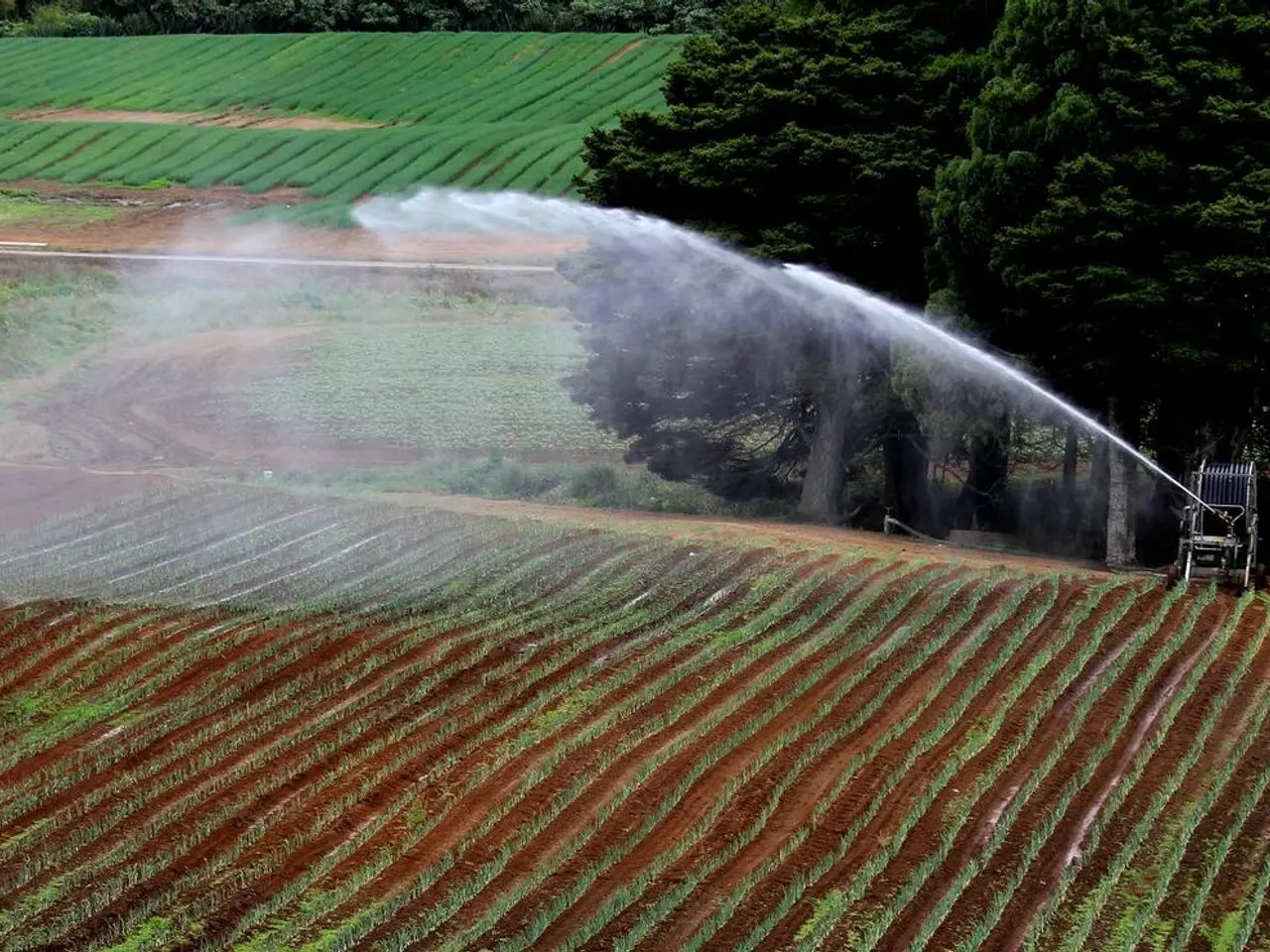
Grain Production for Sustainable Future: Essential for Worldwide Food Stability
In the realm of agriculture, a shift towards sustainability is underway, with farmers embracing practices that not only ensure food production but also preserve the environment. Over the past decade, farmers have been implementing a suite of best practices for sustainable grain production, as outlined below.
Year 1: Foundation Building
Farmers began establishing relationships with sustainable agriculture extension services, marking the foundation of their journey towards sustainable farming. This period also saw the installation of basic monitoring equipment for soil moisture and weather tracking.
Year 1 - Year 3: System Integration
During this phase, farmers expanded cover cropping to 75-100% of their fields during off-seasons, established beneficial insect habitat areas, and began integrated pest management protocols. They also implemented reduced tillage practices on appropriate fields and integrated crop rotation and cover cropping into their farming methods.
Year 2 - Year 5: Optimisation and Certification
As farmers refined their nutrient management based on soil biology improvements, they considered organic certification if market conditions supported premium pricing. They also developed direct marketing relationships for premium grain sales and implemented precision agriculture technologies for maximum efficiency.
The Heartland Grain Cooperative, based in Iowa, transitioned to sustainable practices over eight years, achieving impressive results. Across all crops, the cooperative saw an 18% average yield increase, a 65% reduction in synthetic fertiliser use, a 42% decrease in pesticide applications, $2.3 million annual cost savings, and a carbon sequestration rate of 1.2 tons per acre annually.
Year 4 - Year 5: Certification and Marketing
With corporate sustainability commitments driving demand for sustainably produced grains, major food companies have pledged to source 100% of their grains from sustainable operations by 2030. This demand has been met by organisations like the Leading Harvest certification program, which helps farmers access sustainability-focused buyers.
Consumers can support sustainable grain production by choosing products with recognised certifications like USDA Organic, Regenerative Organic Certified, Leading Harvest, or Fair Trade. Local sourcing also builds relationships between consumers and producers, creating awareness of sustainable farming challenges and successes while supporting rural economic development.
Government Support and Technological Advancements
Government policies increasingly support sustainable agriculture through expanded conservation programs, tax incentives, and research funding. Artificial Intelligence and Machine Learning applications are revolutionising sustainable grain production through predictive analytics for pest management, yield optimisation, and resource allocation. Automation and robotics enable the precise application of inputs and mechanical cultivation that support sustainable practices while reducing labour requirements.
Long-Term Benefits and Carbon Sequestration
Long-term, sustainable operations typically have 20-30% lower input costs than conventional farms. Sustainable grain production can sequester 0.5-2 tons of carbon per acre annually, potentially offsetting 10-15% of annual agricultural greenhouse gas emissions if implemented on 25% of global grain acreage.
Transitioning to Sustainable Grain Production
Transitioning to sustainable grain production typically takes 3-5 years to see full benefits, though improvements begin immediately. Initial transition costs vary but typically range from $50 to $150 per acre, primarily for cover crop seeds, soil testing, and equipment modifications. The Environmental Quality Incentives Program (EQIP) and Conservation Stewardship Program (CSP) offer multi-year contracts guaranteeing support during transition periods.
Educational Resources and Future Prospects
Land-grant universities, sustainable agriculture organisations, and farmer-to-farmer networks provide extensive educational resources. The Sustainable Agriculture Research and Education (SARE) program offers grants for on-farm research and demonstration projects. Gene editing technologies like CRISPR offer the potential for developing climate-resilient grain varieties without introducing foreign genetic material, addressing both productivity and environmental concerns.
In conclusion, the transition to sustainable grain production is a promising step towards balancing food production with ecological preservation. By adopting best practices, farmers can ensure long-term soil health, water quality, and reduced greenhouse gas emissions while maintaining or improving yields.
- Embracing sustainability, farmers are shifting their focus towards plant-based farming methods, recognizing the role it plays in maintaining both food production and environmental health.
- A life filled with sustainability often involves making ethical choices, such as preferring healthy drink options and food that follows science-backed nutrition guidelines.
- As the world grapples with climate-change and environmental-science issues, lifestyle adjustments, including food-and-drink choices and education-and-self-development, become crucial.
- Consumers can contribute to sustainability by choosing food and drink products with recognized certifications, such as USDA Organic, Regenerative Organic Certified, or Fair Trade, thereby supporting farmers committed to sustainable practice.
- The emergence of technology, like Artificial Intelligence and Machine Learning, is revolutionizing the field of sustainable grain production, offering solutions such as predictive analytics for pest management and resource allocation.
- Transitioning to sustainable grain production not only benefits the environment but also farmers' wallets, as these practices typically result in lower input costs while sequestering carbon – potentially offsetting 10-15% of agricultural greenhouse gas emissions.
- For those looking to learn more about sustainable farming, educational resources are abundant, with land-grant universities, sustainable agriculture organizations, and farmer-to-farmer networks providing comprehensive information and opportunities for on-farm research.