Instructional Piece on Watercolor Art: Botanical Landscapes for Novices
In the world of art, botanical watercolor painting stands out as a captivating and intricate craft. This practice offers artists a unique opportunity to blend creativity with nature, resulting in stunning works of art that showcase the beauty of the plant kingdom.
To create depth in botanical watercolor paintings, artists begin with a light wash for the background, gradually adding darker colors to create layers. A technique known as glazing is used to enhance these layers, resulting in a rich and vibrant final product.
For beginners, common plants such as succulents, ferns, herbs, and flowers provide a suitable starting point. As one progresses, experimenting with primary colors leads to various hues, and understanding color mixing becomes essential for creating a strong color foundation.
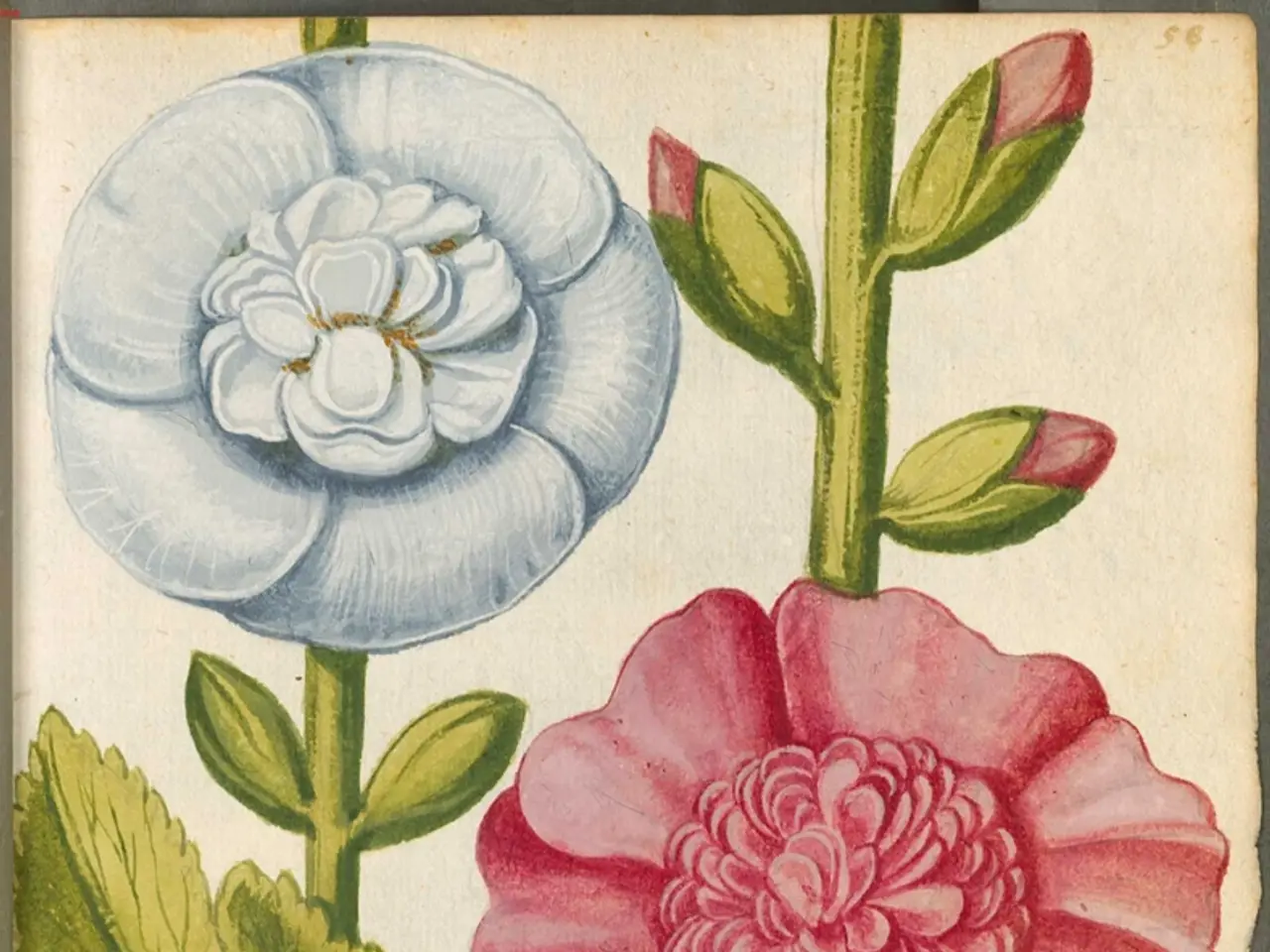
Common details to include in botanical watercolor paintings are leaf veins, petal folds, stems, and branches. Adding these details brings life to the artwork and helps guide the viewer's eye. Focal points, such as choosing one main focal point, using color and contrast, adding detail, and using lines, are crucial for directing the viewer's gaze.
As artists advance, they can explore various techniques beyond the basics of wet-on-wet and wet-on-dry. Advanced techniques include the dry brush technique, layering (glazing), charging, combining watercolor with ink for expressive effects, capturing texture through delicate brush control, and exploring color mixing and glazing to build depth and detail.
Contemporary botanical artists like Victoria Braithwaite focus on capturing the subtleties of delicate plants. Techniques such as the dry brush technique, layering, charging, ink and watercolor combination, advanced color mixing, and textural effects and selective detail are employed to achieve nuanced realism and expressiveness.
Workshops and classes geared toward advancing botanical watercolors emphasize these techniques through guided practice on complex subjects, helping artists achieve a level of nuanced realism and expressiveness beyond foundational skills.
Botanical watercolor painting offers numerous artistic benefits, including improved focus, stress relief, enhanced patience, creative expression, and a deeper connection to nature. Essential materials for this practice include watercolor paints, brushes, watercolor paper, pencil, palette, water container, and a lightbox.
For those interested in delving deeper into the history and artistry of watercolor painting, resources such as "Brushstrokes in Time: 5 Famous Watercolor Artists Who Changed Art" and "Colors in Bloom: Exploring the World of a Watercolor Virtuoso" provide valuable insights. Additionally, botanical drawing books offer essential techniques for illustrating plants accurately.
In conclusion, botanical watercolor painting offers a rich and rewarding artistic journey for those who wish to explore the beauty of the plant kingdom. With a variety of techniques and resources available, artists can express their creativity while learning to capture the intricate details and subtle nuances of the natural world.
[1] Advanced Techniques in Botanical Watercolor Painting: A Comprehensive Guide for Artists [2] Mastering the Art of Botanical Watercolor Painting: Techniques and Inspiration for Artists [3] Botanical Watercolor Painting: A Beginner's Guide to Creating Stunning Artworks [4] Botanical Watercolor Workshops: Advancing Your Skills and Achieving Nuanced Realism [5] Botanical Drawing Books: Essential Resources for Accurate Plant Illustrations
- To supplement their botanical watercolor paintings, artists may find interest in books like "Botanical Drawing Books: Essential Resources for Accurate Plant Illustrations" for improving their plant depiction skills.
- For those eager to explore advanced techniques in the realm of botanical watercolor painting, resources like "[1] Advanced Techniques in Botanical Watercolor Painting: A Comprehensive Guide for Artists" and "[2] Mastering the Art of Botanical Watercolor Painting: Techniques and Inspiration for Artists" can provide valuable insights.